 Reader Favorite
One Chewable a Day of a Protein First Found in a Jellyfish, With Two and a Half Days' Vitamin D Beside It: What the Company's Own Study Reported, What a Federal Court Ordered Seven Years Later, and Why This Page Won't Say What the Box Says
Prevagen Extra Strength is a sixty-dollar bottle of thirty berry-flavored chewable tablets from Quincy Bioscience of Madison, Wisconsin: twenty milligrams of apoaequorin and fifty micrograms of vitamin D, with milk and soy in the small print. I read the label, the company's own ninety-day study, the 2017 complaint by the Federal Trade Commission and the State of New York, the Commission's statement of December 2024 that a federal court had ordered the company to stop making the claims the case challenged, and then the refund page, which wants a phone call and a receipt.

This is a paid advertisement. Sponsored by Quincy Bioscience Holding Company, Inc.

Norman Tate is the pen name of this desk.
No customer is quoted on this page, because the seller's product page prints no reviews that can be checked, and I won't invent one.
Everything about the tablet comes from the seller's own label and pages, read on September 9, 2026.
Everything about the study and the court comes from the study's published summary and from the Federal Trade Commission's own statements, linked at the foot.
You've seen the commercial.
Most men my age have seen it a few hundred times, between the weather and the ball game, and the jellyfish is the part you remember.
What the commercial never mentions is that the company that makes the tablet spent seven years in federal court over what the commercial says, and that in December 2024 the Federal Trade Commission announced that a court had ordered the company to stop making the claims the case challenged. [1]
That's not a rumor and it's not a review.
It's the Commission's own statement, and it's linked at the foot of this page.
A protein, one study, and seven years in court.
So here's what this page is, and what it isn't.
It's a plain description of what's in one chewable tablet, what the company's own study reported, what the government alleged, and what the court ordered.
It's not a page that tells you the tablet does anything for your memory, because after reading the record I'm not in a position to say that, and neither is anyone else selling it.
One tablet a day, in the morning, with or without food, by the label. Every number on this page is for that one tablet.
Here's what the box is.
Prevagen Extra Strength Chewables, from Quincy Bioscience, a company in Madison, Wisconsin, with a toll-free number, a customer-service email and a street address on its pages.
A small white box holding a bottle of thirty berry-flavored tablets you chew rather than swallow, which at one a day is a month.
The panel, in the seller's order: one gram of carbohydrate, vitamin D at fifty micrograms, and apoaequorin at twenty milligrams.
Then the sweeteners and binders, then two words in bold: milk and soy.
The word "Extra Strength" on the front means twenty milligrams of the protein instead of the ten in the regular product, which is a fact about the two labels and nothing more.
I did what I always do.
I read the label before the website.
I read the company's study, published in 2016, in the form the company published it.
I read what the Federal Trade Commission and the New York Attorney General alleged in January 2017, and what the Commission said in December 2024 after the jury and the judge were done.
I read the refund page and the shipping page.
And I looked for customer reviews to quote, found none that could be checked, and decided to say so rather than fill the gap.
What I found is a tablet with one real nutrient in it at a large dose, one protein whose only trial belongs to the company that sells it, a court record that the company's own website doesn't mention, and a refund that takes a phone call, a receipt and a six-to-eight-week wait for a check.
One more thing before the first line, because most of you got here from one of our own advertisements.
Those ads talk about a boxed cereal, three foods, three drinks, and three words or phrases a man is supposed to be able to say.
None of that is in the tablet, and I won't pretend it is.
It's on this page, in its place: the cereal, the drinks and the word test are the eighth line, and the honest version of every headline we run is in the guide linked at the foot.
Line one · The boxA White Box, Thirty Chewable Tablets, and a Panel With Two Lines
This is what's on the side table.
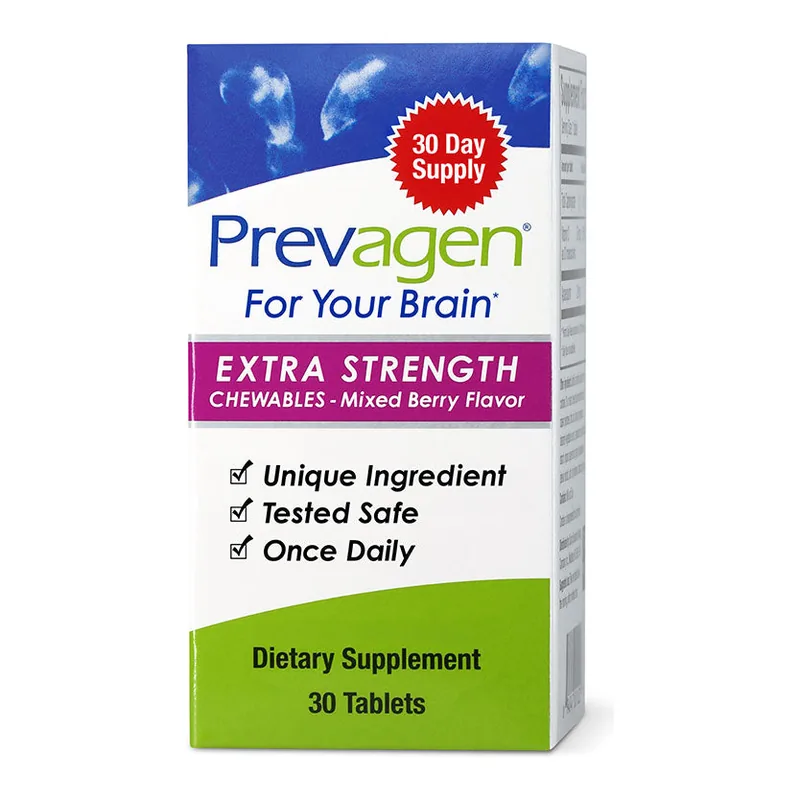
A white box with a purple band and the words Extra Strength, Chewables, Berry Flavor, and Apoaequorin 20 mg on the front.
Inside, a small bottle of thirty tablets you chew, each about the size of a dime.
The back is the panel, and I'll read it to you in the seller's order, per tablet:
Total carbohydrate, one gram.
Vitamin D, as cholecalciferol, fifty micrograms, 250 percent of the Daily Value.
Apoaequorin, twenty milligrams, no Daily Value established.
Then the other ingredients: sorbitol, mannitol, flavorings, and two percent or less of beet juice powder for color, casein peptones, citric acid, lactose, magnesium stearate, maltodextrin, modified corn starch, agave inulin, a stevia extract, salt, soy peptones, stearic acid and sugar.
Contains milk and soy, the label says, in bold.
Then a line most people skip: "Contains a bioengineered food ingredient," which is the label's way of saying the protein is made by engineered bacteria rather than fished out of the sea.
The directions: take one tablet daily in the morning, with or without food.
Two lines on the panel, and one of them is a vitamin you can buy anywhere.
The other is the reason for the box, the commercial and the court case, and it gets the next three lines.

Line two · The proteinTwenty Milligrams of a Protein a Jellyfish Uses to Glow
The line the whole product stands on, and the one that needs the most explaining.
Apoaequorin is a protein first found in a small jellyfish of the Pacific coast, where it binds calcium and gives off a flash of blue light.
For decades it was a laboratory tool, used to watch calcium move inside cells, and the version in this tablet is made by bacteria that have been given the gene for it.
That's what the label's "bioengineered" line refers to.
The company's idea, as its website describes it, is that because the protein binds calcium, it might do something useful for brain cells, which also handle calcium.

Here's the plain question every scientist asked, and the one this page can't settle.
A protein you swallow is treated by the stomach and the gut like any other protein, meat or eggs or beans: taken apart into its building blocks.
Whether any of this one reaches the brain whole is a question the company answers one way and its critics another.
What I can do is read the one trial that exists, which the company ran itself, and then read what the government and a jury made of it.
Twenty milligrams of a jellyfish protein made by bacteria, with a mechanism that's an idea and one trial behind it. The trial is the next line.
Line three · The company's studyNinety Days, 218 Adults, and a Computer Task the Company Says Improved
The only trial of this protein in people, published by the company that sells it.
In 2016 the company published what it calls the Madison Memory Study: 218 adults aged forty to ninety-one who said they had memory concerns took either the protein or a placebo for ninety days, and did a set of computer tasks at the start and again at the end. [2]
The company reported that the group on the protein improved on a computerized verbal-learning task and on its delayed-recall version.
That's the study the commercial rests on, and I've read its summary the way the company published it.
Three things about it belong on this page.
First, it's the company's own study, run and published by the company, which is common in this business and is worth saying every time.
Second, the people in it had memory concerns to begin with, which is not the same as being a healthy man of sixty-five who wants to stay that way.
Third, and this is the part the commercial leaves out: in January 2017 the Federal Trade Commission and the New York Attorney General went to court over this study.
Their complaint alleged that the marketers relied on a study that failed to show the product worked better than a placebo on any measure of cognitive function. [3]
So the same ninety days, the same 218 people and the same computer tasks are described two ways: as an improvement by the company, and as a failure to beat the placebo by the government.
A reader has to hold both, and the next line is where a court sorted them out.

Line four · The courtSeven Years, a Jury, and an Order to Stop
The line the company's website doesn't have, and the reason this page reads the way it does.
The 2017 complaint alleged that the marketers of Prevagen made false and unsubstantiated claims that the product improves memory, provides cognitive benefits and is shown to work, and that those claims were built on the study above. [3]
A complaint is an allegation, not a verdict, and for a long time that's all it was.
The case took seven years.
In December 2024 the Federal Trade Commission announced that, after seven years of litigation including a jury trial, the United States District Court for the Southern District of New York had ordered the makers of the product to stop making the deceptive claims about memory that the lawsuit challenged. [1]
This page describes the tablet. It doesn't say what the box says.
I'm not a lawyer, and I'm not going to tell you what every sentence of that order covers, because the Commission's statement doesn't spell it out and I won't guess.
What I can tell you is what it means for a page like this one.
I'm not going to write that this tablet helps your memory, supports your memory, or does anything for your memory, because the one study behind that sentence is the study a jury heard and a federal judge ruled on.
If the company's own website still says something like it, that's between the company and the court.
What's left, once you take the memory claim off the table, is a description: one protein, one vitamin, some sweeteners, and a price.
That's this page.
A complaint in 2017, a jury trial, and in December 2024 a federal court's order to stop the challenged memory claims. Nothing on this page repeats them.
Line five · The vitamin DFifty Micrograms, 250 Percent of a Day, and a Three-Year Trial in 2,157 People Over Seventy
The second line on the panel, and the only one with a large body of research behind it, none of it about this tablet.
Vitamin D is the vitamin the skin makes in sunlight and the one most men over sixty in northern states run short of in winter.
Fifty micrograms is two thousand international units, and the label counts it as 250 percent of the Daily Value, which is two and a half days' worth in one chew.

What does two thousand units a day do for the thinking of a healthy older man?
The best answer I could find is a large Swiss trial, and it's a plain one.
In DO-HEALTH, 2,157 adults aged seventy and older without major health problems took two thousand units of vitamin D3 a day, a gram of omega-3s, a home strength program, or combinations of them, for three years. [4]
None of the three, alone or together, changed the study's measures, and a screening test of thinking was one of those measures.
That's the same daily dose as this tablet, for three years, in more than two thousand people, and it moved nothing on the thinking test.
Which doesn't make the vitamin useless; it makes it a vitamin, with its own reasons and its own price.
Two and a half days of vitamin D, from a box that sells it as the second line.
The price is the part I'd think about.
Vitamin D3 at two thousand units is sold by the hundred in every pharmacy in the country for a few dollars a bottle, and the reason to take it is a blood test and a clinician's say-so, not a jellyfish.
A real vitamin at a real dose, with a three-year trial in 2,157 older adults that found nothing on a thinking test at this same amount. The honest second line, and the cheap one.

Line six · The small printSorbitol, Mannitol, Milk and Soy Peptones, a Stevia Leaf and a Pinch of Sugar
The line nobody reads and the one a man with a milk problem should.
A chewable tablet has to taste like something and hold together, and this one does it with sorbitol and mannitol, which are sugar alcohols with about half the calories of sugar, plus a stevia extract, flavorings and a little actual sugar.
The whole tablet comes to one gram of carbohydrate, which is a quarter of a teaspoon and nothing to worry about.
The two words in bold are the ones that matter.
Casein peptones are fragments of milk protein, soy peptones are fragments of soy protein, and both are on the label at two percent or less, which is why the box says "Contains: Milk and Soy."
If milk or soy is a problem for you, this is a tablet with both, in small amounts, every morning.
That's on the label, and now it's here.
Beet juice powder gives the purple color.
Agave inulin is a plant fiber, and the rest is the usual binders and a coating of stearic acid.
One gram of carbohydrate, two sugar alcohols, and a little milk and soy in every chew. Read the two bold words if either matters to you.
Line seven · The reviewsThe Customer Quotes on the Seller's Page, and Why None of Them Are Here
The section where I'd normally quote four or five real customers, word for word, and can't.
The seller's product page prints short quotes attributed to "Verified Customer," a first name and an initial.
They have no dates, no count, no star rating and no review system behind them that I could open and read, and the review service the site uses returned nothing for this product when I asked it.
Our rule on this desk is that a customer quote has to come from a public page where you can find it yourself, with a date, or it doesn't run.
These don't meet it, so they don't run, and I'd rather leave the section empty than dress it up.
What I can tell you is that the product has been sold for years, in pharmacies and grocery stores as well as online, and that the people who like it and the people who don't have both been loud for a long time.
Neither group is evidence, and after line four you know why.
No customer is quoted on this page.
That's not an oversight; it's the rule, and this product is the one that made me glad of it.

Line eight · The bowl and the cupThe Cereal, the Three Drinks, the Three Foods and the Word Test From Our Own Advertisements
Our advertisements have been saying, in one version or another, that a boxed cereal, three foods and three drinks have something to do with memory, and that there are three words or phrases a man ought to be able to say.
You're owed the honest version, on one line, so here it is.

Start with the bowl.
A frosted, honey-coated or chocolate cereal is mostly refined starch and added sugar, and a serving can carry more sugar than a cookie.
No cereal "ages the brain faster than time."
Nobody has measured any such thing, and that phrase was written to be clicked.
What the studies do say is duller, and worth more.
In the Framingham Heart Study, adults who drank more sugary beverages scored lower on tests of memory, and daily fruit juice went the same way. [5]
In a Brazilian study of 10,775 adults followed for eight years, the ones who ate the most ultra-processed food, and the sweet cereal shelf is part of that, lost ground on tests of thinking about a quarter faster than the ones who ate the least. [6]
Both are associations across a population, not a sentence on your bowl.
And a quarter faster than slow is still slow.
The same Framingham families, in a different analysis, scored better on memory tests when their diets carried more choline, which is eggs, milk, meat and beans, [7] and none of which is in a chewable tablet.
The three drinks.
The "evening drink" in our advertisement is alcohol, and it's the one with the strongest case behind it: in 550 British civil servants followed for thirty years, the more a person drank, the faster their scores fell on a word-fluency test, and light drinkers had no edge over those who didn't drink at all. [8]
The second is sugar in a glass: soda, sweetened tea, the tall flavored coffee from the counter, which is a soft drink with coffee in it.
The Framingham finding above is about sugary drinks, and those are sugary drinks. [5]
The third, in one of our headlines, was coffee.
That was our worst headline.
Plain black coffee and plain tea aren't the drinks any of those studies were about.
Keep your coffee.
This tablet has no caffeine and no alcohol, and chewing it doesn't change what's in your cup.
The three foods.
Processed meat, fried food, and the white-flour shelf: pastries, packaged cakes, white bread.
Our advertisement says "just stop eating these three."
The research says something slower.
In 960 older adults followed for nearly five years, the ones whose meals looked most like the MIND pattern, vegetables, berries, nuts, whole grains, beans, fish and olive oil, held their thinking scores better, and the gap between the top and bottom thirds worked out to about seven and a half years of age. [9]
That's a pattern over years, not a list of three, and it can't be sold in a headline.
Which is exactly why our headline doesn't say it.
Less sugar in the bowl and the glass.
Less alcohol in the evening.
Keep the coffee.
Eat more like the Mediterranean shelf and less like the vending machine.
Every one of those costs nothing, and none of them is in the tablet.
The three words, or the three phrases.
There's no such list.
What our advertisement borrowed from is the short, scored mental-status test clinicians have given at the bedside since the 1970s: the date and the place, a few words to hold in mind and give back a minute later, a sum, naming, repeating one sentence, copying a drawing.
It's given in person and read against your age and your schooling by someone trained to do it, and a low score is a reason for a proper look, not a verdict.
Stumbling on a word when you're tired or being timed means nothing on its own.
Nothing begins at a word.
If the worry behind the click is real, that's fifteen minutes with your own clinician, and it costs you nothing from me.
And the advertisement about the things some men take every day.
That one sits closest to real research, and it's the one an advertisement has no business acting on.
Some kinds of daily medicine, including a few sold over the counter for allergies and for the night, are on the lists pharmacists check for people over 65.
Don't stop or change any of it because of an advertisement, ours included. Put everything you take in one bag, this box included, take it to the pharmacist, and ask one question: is anything here a poor choice at my age?
Two thousand units of vitamin D a day is worth naming at that counter if you already take a vitamin D or a multivitamin, because the doses add up.
The guide at the foot of this page has that section written out, with the studies.
So if you clicked on the cereal, here's where the cereal went: onto the table next to a box that has nothing to do with it, where the real answer was always a plainer bowl and a walk after dinner.
Line nine · What it isn'tSix Things One Chewable Won't Do
- It won't do what the commercial says. The one study behind that sentence is the company's own, the government alleged it failed to beat a placebo, and a federal court ordered the challenged memory claims stopped in 2024.
- It won't give you a protein that has been tested by anyone other than the company that sells it. There is one trial, and it's theirs.
- It won't do for your thinking what a vitamin alone can't. At this same two thousand units, a three-year trial in 2,157 people over seventy found nothing on a screening test.
- It won't come without milk and soy. Both are on the label in bold.
- It won't act on any condition a clinician has named. It's a dietary supplement, and its own label carries the sentence that says so.
- It won't refund itself. The refund takes a phone call, the receipt, the bottle, and a check that arrives in six to eight weeks.
If that list annoys you, I'd rather you were annoyed now than after the second bottle.
Line ten · The routineIf You Do Buy It: One Bottle, the Receipt in a Drawer, a Word With the Pharmacist, One Notebook
If you're going to spend the money, spend it as a test with a date on it, and know before you start what the record says.
- Read line four again, and buy only if you're buying a description, not a promise. Nothing on this page says the tablet does anything for your memory, and the court record is why.
- Buy one bottle, not the three-pack. Thirty days is the test, and the refund clock is forty-five days from the purchase.
- Put the receipt and the box in a drawer the day it arrives. The refund wants both, plus a phone call to the number on this page.
- Tell the pharmacist about the two thousand units of vitamin D if you already take any. Doses add up, and a blood test is the only way to know if you need it.
- Chew one tablet in the morning, every morning, with or without food, as the label says. A tablet on the days you remember tests nothing.
- Write one line a day in a notebook. Not "sharper" or "foggier." What you were doing at ten, and how it went.
- On day thirty, read the thirty lines. If they read better than the month before, decide whether that's the tablet, the walk, or the sleep. If they don't, you have fifteen days left on the refund and a phone number.
Look at that list the way I do.
Five of the seven things cost nothing.
The box is the one you'll pay for, and the notebook is the one that will tell you the truth.

Line eleven · Who it's forWho It Suits, and Who It Doesn't
This is worth a look if:
- You've read the court record on line four and you still want to run your own thirty-day test, with a notebook, on a tablet whose claims a court has ruled on.
- You want a chewable tablet rather than a capsule, and a month's supply that fits in a coat pocket.
- You want two thousand units of vitamin D a day and don't mind paying a jellyfish price for it.
- You can hold two ideas at once: a company's own study that reported an improvement, and a government complaint and a jury that read it the other way.
- You'll keep the receipt and the box, and you'll make the phone call if the month doesn't earn a second one.
Give it a miss if:
- You want a memory claim you can trust. This page makes none, for the reasons on line four.
- You want a protein tested by someone other than its seller. There is one trial, and it's the company's.
- You can't have milk or soy. Both are on the label in bold.
- You want a refund you can do by email. This one takes a phone call, a receipt, the bottle and a six-to-eight-week wait for a check.
- You already take vitamin D and haven't asked a pharmacist about adding two thousand units. Ask first.
Line twelve · Where it's soldFrom a Wisconsin Company With a Street Address, Shipping Inside the United States, and a Refund That Wants a Phone Call
The box is sold by Quincy Bioscience on its own website, and that's the only place this page links to.

The company is reachable and findable.
Quincy Bioscience, with a street address in Madison, Wisconsin, a toll-free number, a customer-service email, and a second address on the label, in Middleton, for the distributor.
The label carries a certification seal from an independent testing body, which speaks to what's in the tablet, not to what it does.
The current price is shown on its page, not here.
The day I read it, one bottle cost about two dollars a tablet, which is two dollars a day, and the three-bottle pack was cheaper per bottle.
Buy one bottle.
Thirty days is a test.
A three-pack of something whose claims a court has ruled on is a bet, and the refund covers forty-five days, not ninety.
Now the two things that matter more than the price.
First, shipping.
The company ships only to addresses in the United States, at no charge on orders over fifty dollars in the forty-eight contiguous states, so one bottle qualifies; it says a day or two to process and three to ten days in the mail depending on the carrier.
Second, the refund.
Read this twice, because it has more steps than most.
The policy says: if you're dissatisfied for any reason, you can get a refund of the purchase price, after any discounts, including taxes and shipping, up to forty-five days after the date of purchase.
To get it, you keep the original receipt and the original bottle with any unused product, and you call the number on this page for instructions.
You'll be told to return the product either to where you bought it or to the company, and the refund comes by check, which the company says takes six to eight weeks.
Forty-five days, a receipt, a bottle, a phone call and a check: that's the whole promise, and it's a fair one if you keep the paperwork.
I'd rather spell it out than call it a refund with no strings.
Everything in one tablet
| Ingredient | Amount per serving |
|---|---|
| Apoaequorin | 20 mg |
| Vitamin D (as cholecalciferol) | 50 mcg (250 % DV) |
| Other ingredients: sorbitol, mannitol, flavorings, and 2 % or less of beet juice powder (color), casein peptones, citric acid, lactose, magnesium stearate, maltodextrin, modified corn starch, agave inulin, stevia extract, salt, soy peptones, stearic acid, sugar | — |
Full details on each ingredient are in the guide linked at the bottom of this page.
The ingredient and advertising guide linked at the foot of this page goes through both lines.
What each ingredient is.
What the research does and doesn't show, at what dose and in what form.
What the court record says, with the Commission's own statements linked.
And which of our own headlines it does and doesn't support.
Print it and take it to the pharmacist if you take anything daily.
It's written for that.
See the current price on the seller's site
One berry-flavored chewable tablet a day: 20 milligrams of a protein first found in a jellyfish and two and a half days' worth of vitamin D, from a Wisconsin company.
CHECK AVAILABILITYSold and shipped within the United States by Quincy Bioscience of Madison, Wisconsin, at no charge on orders over fifty dollars · A 45-day refund by phone, with the receipt and the bottle, paid by check in six to eight weeks · This page makes no claim about memory: read line four before you buy
QuestionsWhat Readers Ask Me Before Their First Box
Questions readers ask
Is this medicine?
No. It's a dietary supplement, a protein and a vitamin in a chewable tablet, sold by a company in Wisconsin.
The label carries the standard sentence every American supplement carries, the one that says the FDA hasn't evaluated its claims.
Does it have caffeine?
No. A protein, a vitamin, sweeteners and a coating.
Whatever wakes you up is your coffee.
What did the court actually order?
The Federal Trade Commission said in December 2024 that, after seven years of litigation and a jury trial, a federal court in New York ordered the makers of the product to stop making the deceptive claims about memory that the lawsuit challenged. The Commission's statement is linked at the foot of this page.
I'm not a lawyer, and I won't tell you more than the statement says.
Then why are you writing about it at all?
Because men my age see the commercial every night and deserve a plain description of what's in the box and what the record says. That's what this page is.
It describes the tablet and makes no claim about your memory.
What does "Extra Strength" mean?
Twenty milligrams of the protein per tablet instead of the ten in the regular product. That's a fact about two labels.
It says nothing about whether either amount does anything.
Will it help my memory?
I can't tell you that, and after line four you can see why nobody selling it should either. The company's own study reported an improvement on a computer task; the government alleged the study failed to beat a placebo; a court ordered the challenged claims stopped.
What you'd be buying is a protein and a vitamin.
Is the vitamin D worth it?
Fifty micrograms is two thousand units, a common daily dose, and the reason to take it is a blood test and your clinician's say-so. At that same dose, a three-year trial in 2,157 people over seventy found nothing on a thinking test.
Plain vitamin D3 costs a few dollars a bottle at any pharmacy.
Can I take it alongside what I already take?
Ask your clinician or pharmacist and take the ingredient guide with you. Two thousand units of vitamin D is worth naming if you already take vitamin D or a multivitamin.
Two minutes at the pharmacy counter answers it.
Why are there no customer reviews on this page?
Because the seller's page prints quotes with no dates, no count and no system I could open, and our rule is that a quote has to be checkable or it doesn't run.
I'd rather leave the section empty than dress it up.
Does it ship to me?
Only within the United States. At no charge on orders over fifty dollars in the forty-eight contiguous states, which one bottle qualifies for.
What if it arrives and I don't like it?
Within forty-five days of purchase, keep the receipt and the bottle, call the company's number, and follow the instructions. The refund comes by check in six to eight weeks.
Your advertisement was about a cereal, or three foods, or three drinks. Where is that on this page?
On line eight, in full, with the studies. The short version: less sugar in the bowl and the glass, less alcohol in the evening, keep your plain coffee, and eat more like the Mediterranean shelf.
None of it is in the tablet, and the ingredient and advertising guide at the foot goes through every headline we run and says which ones overstate.
Your advertisement said something about three phrases, or spelling three words. Is there a test I can take?
Not on a screen. The words and phrases come from the short mental-status test clinicians give in person, and it's read against your age and schooling by someone trained to do it.
Nothing begins at a word. If the worry behind the click is real, ask your clinician for the proper test.
It's fifteen minutes.
The short versionEverything Above, in Sixty Seconds
- A bottle of thirty berry-flavored chewable tablets from Quincy Bioscience of Madison, Wisconsin: apoaequorin 20 milligrams and vitamin D 50 micrograms per tablet, with milk and soy in the small print, no caffeine, one a day, a month to the bottle.
- The protein: first found in a jellyfish, made by bacteria, with one ninety-day trial in 218 adults with memory concerns, run by the company. [2] The government alleged in 2017 that the trial failed to beat a placebo on any measure, [3] and in December 2024 the Federal Trade Commission said a federal court had ordered the challenged memory claims stopped. [1]
- The vitamin: two thousand units, two and a half days' worth, the dose a three-year trial in 2,157 people over seventy found did nothing on a thinking test. [4]
- No customer reviews here, because the seller's page has none that can be checked.
- Ships only inside the United States; a 45-day refund by phone, with the receipt and the bottle, paid by check in six to eight weeks.
- The cereal, three drinks, three foods and the word test from our own advertisements, on line eight: less sugar, less alcohol, keep the coffee, more like the Mediterranean shelf, and no test on a screen. None of it is in the tablet.
- The honest use: read line four first, one bottle, the receipt in a drawer, a word with the pharmacist about the vitamin D, one tablet every morning for thirty days, and a notebook.

The last lineWhat a Jellyfish Protein Is Actually Worth
Here's the whole thing in one breath.
One protein with an idea behind it and one trial, the seller's own.
One vitamin at a good dose that you can buy for a few dollars anywhere.
A complaint, a jury, and an order from a federal court to stop the claims the commercial made famous.
And a refund that's fair if you keep the receipt and pick up the phone.
Read the record, then decide.
If you're a man who has read line four, wants a chewable with a vitamin in it, and is willing to run his own thirty days with a notebook and no promise attached, that's worth one bottle.
Not because of the commercial.
Because you'll know exactly what the box holds, and exactly what the court said about the rest.
Read line four, buy one bottle, keep the receipt and the box, tell the pharmacist about the vitamin D, chew one tablet every morning, and write one line a day for thirty days. The notebook is a better judge than the commercial.
Check the current price and availability
One berry-flavored chewable tablet a day: 20 milligrams of a protein first found in a jellyfish and two and a half days' worth of vitamin D, from a Wisconsin company.
CHECK AVAILABILITYSold and shipped within the United States by Quincy Bioscience of Madison, Wisconsin, at no charge on orders over fifty dollars · A 45-day refund by phone, with the receipt and the bottle, paid by check in six to eight weeks · This page makes no claim about memory: read line four before you buy
P.S. If you take one thing from this page, take the two dates.
January 2017, when the government said the company's study didn't beat a placebo.
December 2024, when the government said a federal court had ordered the claims stopped.
Everything else about this box sits between those two.
P.P.S. If the afternoon fog has been with you for a year, and it's there before the coffee too, talk to your own clinician before you buy anything.
A chewable tablet in the morning is a small habit.
It was never going to answer a question a clinician answers in fifteen minutes and a blood test.
P.P.P.S. And if you do order it, keep the notebook, and keep the receipt.
When the bottle is empty, you'll have thirty lines about your own mornings and a piece of paper that gets your money back, and both are worth more than the box, whichever way the lines turn out.